
As I stood in my kitchen, the rich aroma of garlic sizzling in the pan took me back to a bustling Tokyo street market, where the enticing scent of Yaki Udon wafted through the air. This Quick & Delicious Shrimp Yaki Udon Stir Fry is my go-to when I crave a comforting dish that transports me without needing to leave the house. In under 20 minutes, you can whip up a delightful medley of chewy udon noodles, tender shrimp, and fresh vegetables, all coated in a savory sauce that will have your taste buds dancing. Not only is this meal incredibly satisfying, but it’s also a fantastic way to make weeknight dinners feel special—no more settling for fast food! Are you ready to dive into a bowl of homemade happiness?
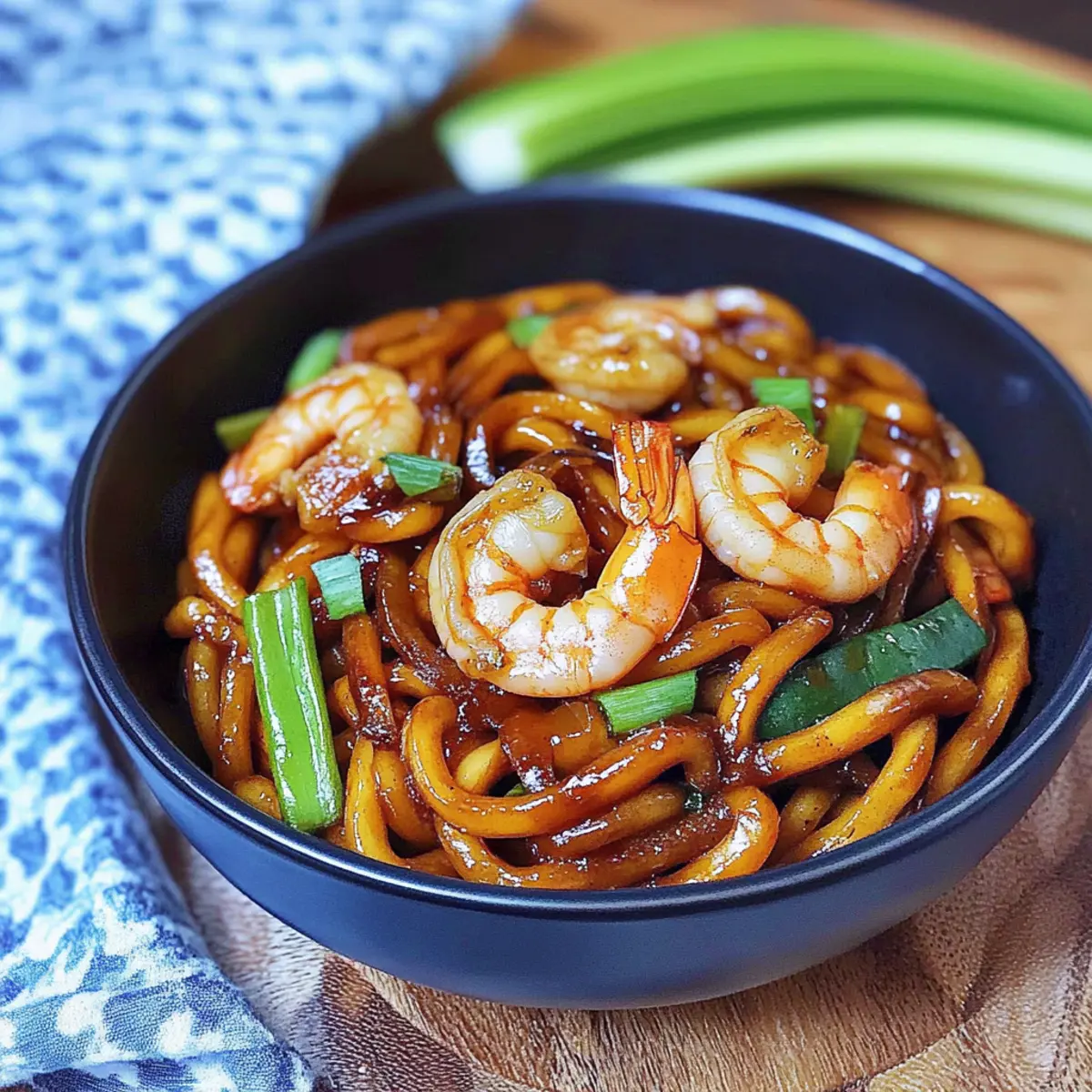
Why is Yaki Udon a Must-Try?
Quick Cooking Time: In just 20 minutes, you can serve a satisfying meal that beats takeout any day.
Flavor Explosion: The combination of shrimp, garlic, and rich sauces creates a symphony of tastes that is both savory and sweet.
Noodle Perfection: Chewy udon noodles provide a delightful texture that elevates the dish to comfort food status.
Versatile Ingredients: Feel free to swap shrimp for chicken or tofu, making it adaptable for everyone. For even more variety, try adding a colorful mix of veggies for extra crunch, just like in my Cheese Lasagna Marinara.
Impressive Presentation: Garnish with spring onions and sesame seeds for a restaurant-worthy finish that will wow your family and friends!
Yaki Udon with Shrimp Ingredients
For the Noodles
• Udon Noodles – Perfect for a chewy base; vacuum-packed udon is the easiest choice for convenience.
• Neutral Oil – Great for sautéing; feel free to substitute with any vegetable oil you have on hand.
For the Stir-Fry
• Shrimp – The star protein that brings sweetness and depth; can be swapped with chicken or tofu for a twist.
• Garlic – Freshly minced for aromatic goodness; it enhances the overall flavor of the dish.
• Yellow Onion – Adds a touch of sweetness; you can also use red onion for a different flavor profile.
• White Mushrooms – These contribute umami and texture; shiitake mushrooms are a wonderful alternative.
• Carrot – Brings vibrant color and crunch; cut into matchsticks for the best presentation.
• Spring Onion – Provides a mild onion flavor; remember to chop both green and white parts for added freshness.
• Soy Sauce – A staple seasoning that elevates your Yaki Udon’s overall seasoning profile.
For Flavoring
• Salt and Pepper – Essential for a flavor boost; adjust to your taste preferences to enhance the dish.
For the Sauce
• Oyster Sauce – Gives a rich, savory depth; opt for mushroom sauce if you’re looking for a vegetarian option.
• Dark Soy Sauce – This will give your dish a lovely dark hue; avoid regular soy sauce here for the best flavor.
• Rice Vinegar – Adds a refreshing tang; apple cider vinegar works well in a pinch.
• Brown Sugar – Balances the flavors with a hint of sweetness; honey can be used as a substitute if desired.
• Freshly Crushed Black Pepper – A little kick to your sauce; ground black pepper can also be used if needed.
• Toasted Sesame Oil – Essential for that nutty aroma; skip substitutions for true Yaki Udon flavor.
Step‑by‑Step Instructions for Yaki Udon with Shrimp
Step 1: Prepare the Udon Noodles
Begin by boiling a pot of water over high heat. Once boiling, add the udon noodles and cook them according to the package instructions, typically about 2-3 minutes. Drain the noodles and rinse them under cold water to stop the cooking process. Drizzle a small amount of oil over the noodles to prevent sticking, and set them aside while you prepare the stir-fry.
Step 2: Sauté the Garlic
In a large frying pan or wok, heat 1 tablespoon of neutral oil over medium heat. Once the oil is shimmering, add the minced garlic and sauté for about 1 minute, until fragrant and slightly golden. This garlic base will infuse your Yaki Udon with a wonderful aroma and flavor, making it the perfect start to your dish.
Step 3: Cook the Vegetables
Next, add the sliced white mushrooms to the pan, stirring frequently until they become soft, about 2-3 minutes. Then, add in the sliced yellow onion and matchstick-cut carrots. Cook the mixture for an additional 2-3 minutes, until the vegetables are tender yet still have a slight crunch. Season with a pinch of salt and pepper, then transfer the sautéed vegetables to a plate.
Step 4: Sear the Shrimp
In the same pan, add another 2 tablespoons of oil and turn the heat to high. Once hot, add the shrimp in a single layer, seasoning them with soy sauce and a pinch of salt. Cook the shrimp for about 2-3 minutes on each side, or until they turn pink and opaque. This quick cooking will ensure your shrimp are juicy and tender, ready to complement the Yaki Udon.
Step 5: Combine Noodles and Shrimp
Once the shrimp are cooked, add the prepared udon noodles to the pan. Stir-fry everything on high heat for about 2-3 minutes, using a spatula to toss continuously. Your noodles will start to slightly crisp on the edges, enhancing their texture. At this stage, the enticing aromas of the Yaki Udon with shrimp will fill your kitchen.
Step 6: Add the Sauce and Vegetables
Pour the prepared sauce over the noodle and shrimp mixture, stirring well to coat everything evenly. Next, gently fold back in the sautéed vegetables, ensuring they’re distributed throughout the dish. Cook for an additional 1-2 minutes, letting the flavors meld together. The sauce should cling to the noodles beautifully, creating a harmonious blend of tastes.
Step 7: Serve and Garnish
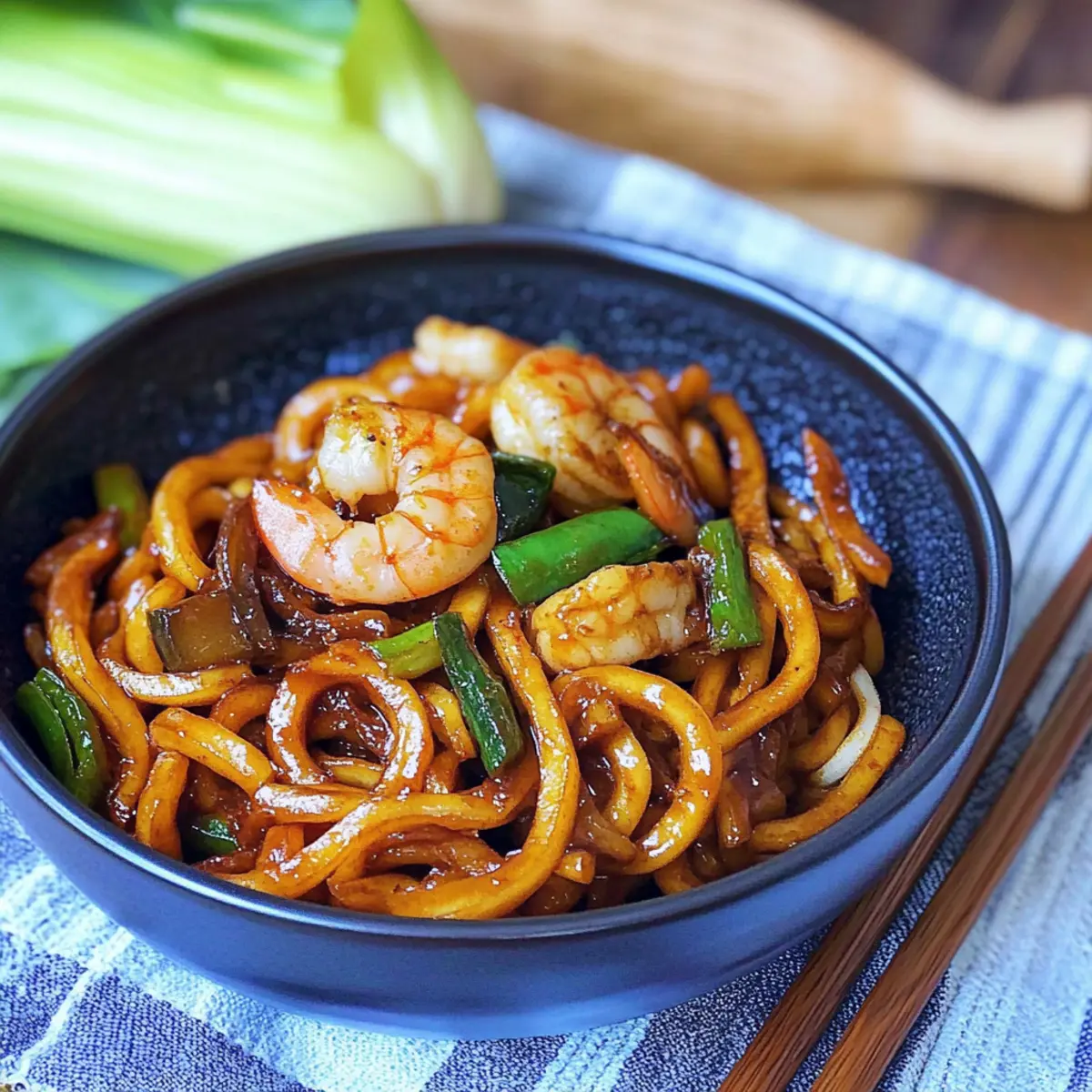
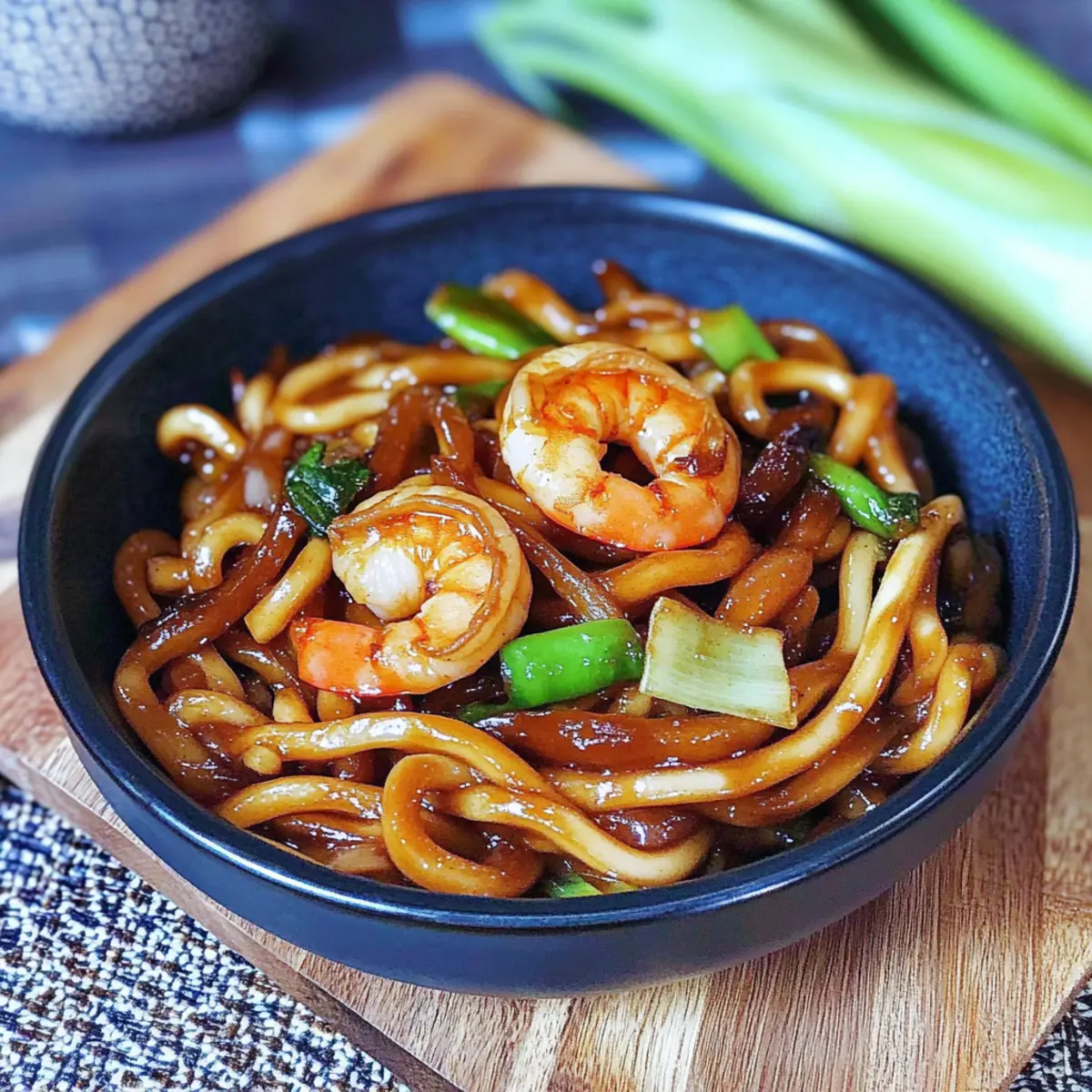
Remove the Yaki Udon from heat, then plate it generously onto serving dishes. Sprinkle chopped spring onions over the top for a fresh garnish. Enjoy your delightful homemade Yaki Udon with shrimp while it’s still hot, relishing every bite of this comforting and quick meal.
How to Store and Freeze Yaki Udon with Shrimp
Fridge: Store leftovers in an airtight container for up to 2 days. Make sure to let the dish cool fully before sealing to maintain freshness.
Freezer: You can freeze Yaki Udon with shrimp for up to 1 month. Portion it into freezer-safe containers, leaving some space to allow for expansion.
Reheating: Reheat on the stove over medium heat, adding a splash of water or broth to revive the noodles and prevent them from drying out. Stir frequently until heated through.
Note: The quality may change slightly after freezing, but the flavors of the shrimp and vegetables will still be delicious!
Expert Tips for Yaki Udon with Shrimp
• High Heat Cooking: Use high heat when stir-frying to achieve that desired crispy texture on the noodles without overcooking the shrimp.
• Don’t Overcrowd the Pan: Make sure not to overload the pan with shrimp or vegetables; this will prevent steaming and keep everything nicely sautéed.
• Fresh Ingredients: Opt for fresh garlic and vegetables whenever possible, as they significantly enhance the flavor profile of your Yaki Udon with shrimp.
• Adjust the Sauce: Taste your sauce before adding it to the noodles; feel free to tweak seasonings to match your preferred flavor balance.
• Meal Prep Option: Prepare and chop your vegetables ahead of time, allowing for even quicker assembly during busy weeknights!
Yaki Udon with Shrimp Variations
Feel free to get creative with this recipe and make it your own with these delightful twists!
- Protein Swap: Replace shrimp with chicken or tofu for a different flavor and texture experience. This keeps it versatile for all diets!
- Extra Veggies: Add vibrant bell peppers, broccoli, or snow peas to boost nutrition and color. Mix it up with whatever is fresh in your fridge!
- Spicy Kick: For those who love heat, incorporate chili sauce or fresh chili peppers to spice things up. A little heat can elevate this dish to new heights.
- Noodle Choices: Try using rice noodles or buckwheat noodles instead of udon for a gluten-free alternative. Each noodle brings its unique taste and texture!
- Herbal Infusion: Toss in fresh herbs like cilantro or basil for a refreshing twist that will brighten every bite. A sprinkle of herbs can transform the dish beautifully!
- Umami Boost: Add a sprinkle of sesame seeds or a dash of fish sauce for an extra umami flavor. These nuances really enhance the depth of the dish.
- Saucy Adventure: Experiment with a different sauce, like teriyaki or a spicy gochujang sauce for a bold flavor profile inspired by dishes like Spicy Korean Chicken.
- Fruit Finessing: For a hint of sweetness, toss in some mango or pineapple chunks. The tropical flavors can be a delightful surprise in this savory dish!
Each option opens a door to delicious possibilities, ensuring that every time you make Yaki Udon, it’s a bit different and even more enjoyable.
What to Serve with Quick & Delicious Shrimp Yaki Udon Stir Fry
Elevate your meal experience with tasty sides that perfectly complement this quick and satisfying dish.
- Crispy Spring Rolls: These crunchy appetizers add a delightful texture and are perfect for dipping into sweet chili sauce.
- Miso Soup: Warm and comforting, miso soup’s umami flavor pairs beautifully with the savory notes of Yaki Udon.
- Garlic Edamame: Lightly salted and garlicky, these green beauties offer a salty crunch that’s impossible to resist.
- Asian Slaw: A refreshing mixture of cabbage, carrots, and sesame dressing provides a crisp, bright contrast to the rich noodles.
- Steamed Broccoli: A healthy addition, with its subtle bitterness balancing the sweetness of the dish; plus, it adds vibrant green color.
- Fruit Salad: A light, sweet fruit medley can cleanse the palate, enhancing the experience of your flavorful noodle dish.
- Green Tea: This light beverage elevates your meal with its soothing properties, and its bitterness contrasts with the sweetness of the Yaki Udon.
- Chocolate Mochi: For dessert, these soft rice cakes filled with chocolate create a delightful finish to your delicious meal.
Make Ahead Options
These Yaki Udon with Shrimp are perfect for meal prep enthusiasts! You can cook the udon noodles and sauté the vegetables up to 24 hours in advance, storing them separately in airtight containers in the refrigerator. Additionally, you can season and marinate the shrimp up to 3 days beforehand, ensuring they’re flavorful when it’s time to cook. To maintain their quality, drizzle a bit of oil on the noodles to prevent sticking and cover the shrimp tightly. When you’re ready to serve, simply reheat the noodles on high heat, sauté the shrimp for a few minutes, and toss everything together with the prepared sauce. You’ll have a delightful and satisfying meal ready in no time, just like fresh takeout!
Yaki Udon with Shrimp Recipe FAQs
How do I choose the best shrimp for Yaki Udon?
Absolutely! Look for shrimp that are firm and translucent, without any dark spots or strong odors. Fresh or frozen shrimp can be used—just ensure they’re peeled and deveined for easiest cooking. If you’re going for frozen, I recommend thawing them in the refrigerator overnight for best texture.
What is the best way to store leftover Yaki Udon?
You can store leftovers in an airtight container in the refrigerator for up to 2 days. Make sure to let the dish cool completely before sealing it. This helps maintain freshness and flavor. When you’re ready to enjoy it again, simply reheat on the stove, adding a splash of water to rejuvenate the noodles.
Can I freeze Yaki Udon with shrimp?
Yes, you can! To freeze Yaki Udon, first let it cool completely, then portion it into freezer-safe containers. It will keep well for up to 1 month. When you’re ready to eat, thaw it in the refrigerator and reheat on the stove with a little water or broth to keep everything moist and prevent sticking.
What should I do if my noodles become sticky?
Very! If your noodles become sticky, preemptively coat them with a drizzle of neutral oil right after rinsing. If they do stick after cooking, add a splash of water while reheating, stirring gently to loosen the noodles without overcooking them.
Is this recipe suitable for people with seafood allergies?
While Yaki Udon traditionally includes shrimp, you can easily adapt this recipe! Simply substitute the shrimp with chicken or tofu for a delicious alternative. Just make sure to adjust the cook times accordingly—chicken may need a few extra minutes to cook through.
Are there any dietary considerations I should keep in mind?
If you’re cooking for someone with dietary restrictions, I recommend using gluten-free soy sauce and oyster sauce substitutes to make this dish gluten-friendly, or you could opt for mushroom sauce for a vegetarian version. Always double-check for allergens like shellfish and make any adjustments needed for individual preferences!
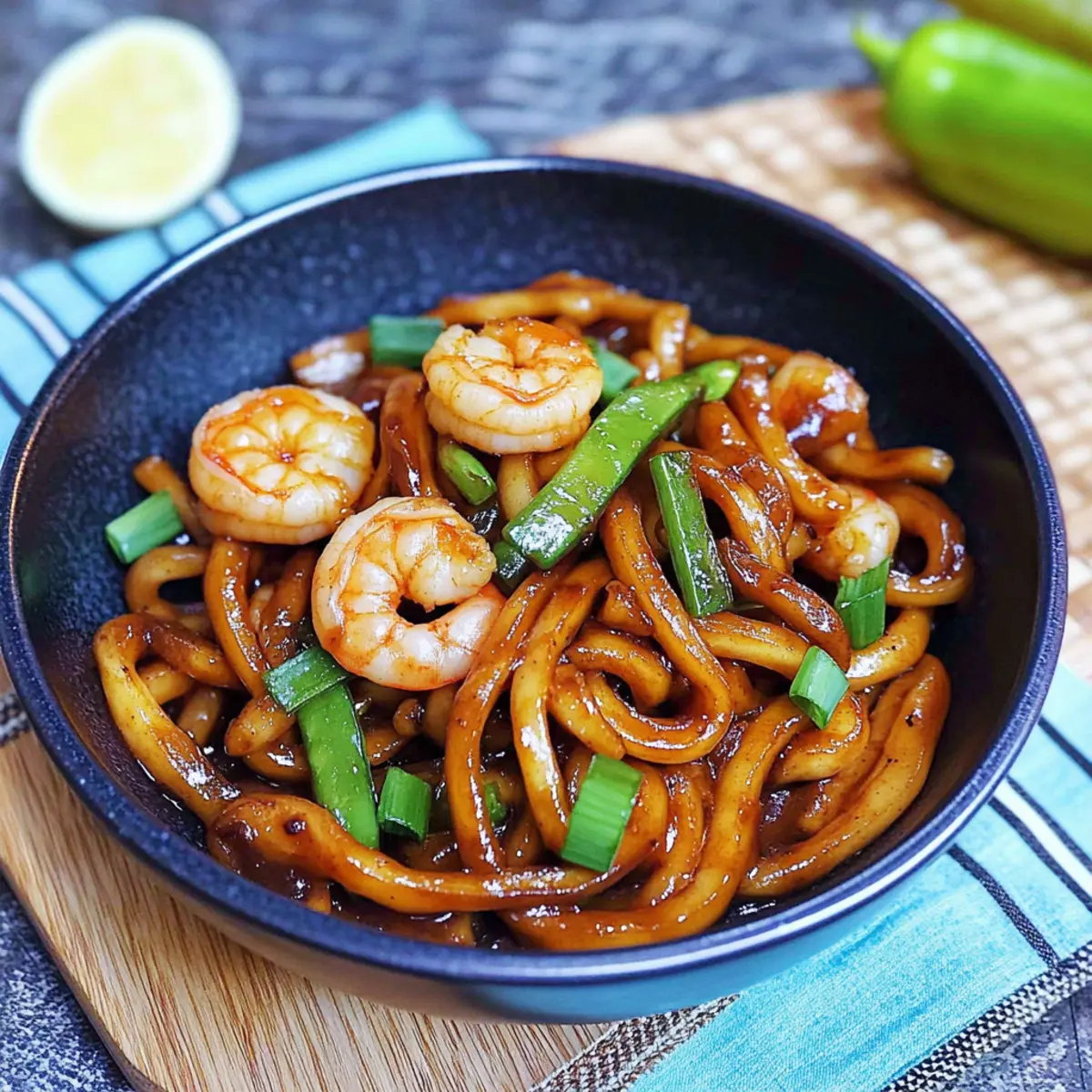
Irresistible Yaki Udon with Shrimp in Just 20 Minutes
Ingredients
Equipment
Method
- Begin by boiling a pot of water over high heat. Once boiling, add the udon noodles and cook them according to the package instructions, typically about 2-3 minutes. Drain and rinse under cold water, drizzle a small amount of oil over the noodles to prevent sticking, and set aside.
- In a large frying pan or wok, heat 1 tablespoon of neutral oil over medium heat. Once shimmering, add minced garlic and sauté for about 1 minute until fragrant. This garlic base infuses aroma and flavor.
- Add the sliced white mushrooms, stirring frequently until soft, about 2-3 minutes. Then, add sliced yellow onion and matchstick-cut carrots. Cook for an additional 2-3 minutes until the vegetables are tender yet still have a slight crunch. Season with salt and pepper and transfer to a plate.
- In the same pan, add 2 tablespoons of oil and turn the heat to high. Once hot, add the shrimp, seasoning with soy sauce and salt. Cook shrimp for about 2-3 minutes on each side until pink and opaque.
- Once the shrimp are cooked, add the prepared udon noodles to the pan and stir-fry everything on high heat for about 2-3 minutes, tossing continuously with a spatula.
- Pour the prepared sauce over the noodle and shrimp mixture, stirring well to coat everything evenly. Gently fold the sautéed vegetables back in and cook for an additional 1-2 minutes.
- Remove from heat, plate generously onto serving dishes, and sprinkle chopped spring onions over the top as a fresh garnish. Enjoy your delightful Yaki Udon with shrimp while it’s still hot.
Leave a Reply