
As I tossed together the vibrant ingredients of my Traditional Greek Salad, the sun-drenched flavors of the Mediterranean danced around me—it felt like a mini vacation right in my kitchen. Horiatiki, or the classic Greek salad, is a celebration of fresh, wholesome ingredients that effortlessly blend to create a dish that’s both simple and satisfying. With juicy tomatoes, crisp cucumbers, colorful bell peppers, and tangy feta, this salad is not just a feast for the eyes but also a fantastic way to elevate your healthy eating game. It’s quick to whip up, making it perfect for those busy weekdays or casual gatherings with friends. So, why not take a trip to Greece through your taste buds and enjoy this wonderfully fresh dish? What fresh twists will you add to your own version?
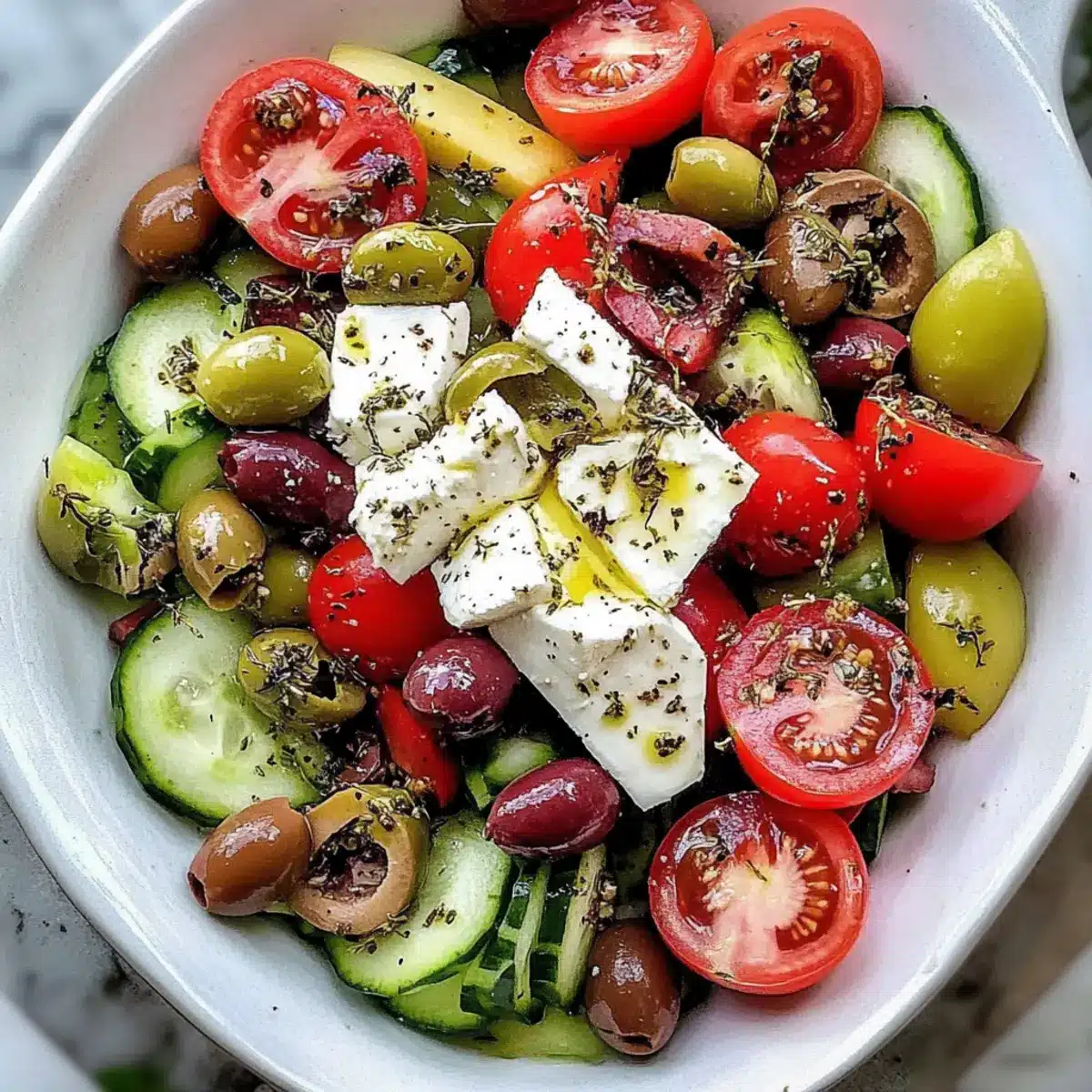
Why is Horiatiki so special?
Freshness at Its Core: The use of seasonal produce ensures every bite bursts with flavor, bringing the vibrant Mediterranean right to your table.
Versatile and Adaptable: This salad is easily customizable—substitute ingredients based on what you have, like trying roasted red peppers for added sweetness.
Quick to Prepare: In just minutes, you can create a delightful dish that’s perfect for busy days or impromptu gatherings.
Healthy and Wholesome: Packed with nutrients, this Traditional Greek Salad is a great addition to any healthy eating plan, rich in essential vitamins.
Crowd-Pleasing Delight: Whether served as an appetizer or a side, it’s guaranteed to impress friends and family alike! As you whip up this refreshing salad, don’t forget to check out my tips for simple Mediterranean recipes to keep the culinary inspiration flowing!
Traditional Greek Salad Ingredients
For the Salad
- Tomatoes – Use Campari, cocktail, or cherry varieties for maximum sweetness and juiciness.
- Cucumber – An English cucumber is ideal for that crisp, refreshing crunch; Persian cucumbers make a fine substitute.
- Green Bell Pepper – This adds vibrant color and a mild, sweet flavor; be sure to seed and chop into bite-sized pieces.
- Kalamata Olives – Opt for pitted olives to enhance the briny depth without the bitterness.
- Red Onion – Thinly slice for a sharp bite that balances the salad nicely.
For the Dressing
- Extra-Virgin Olive Oil – A fruity variety acts as the key flavor enhancer for this Traditional Greek Salad.
- Red Wine Vinegar – Choose a good quality vinegar to provide acidity that balances out the flavors beautifully.
- Dried Oregano – This classic Greek herb adds a delightful aroma and flavor; fresh oregano can be used if available.
- Kosher Salt & Black Pepper – Essential for seasoning; adjust these to taste for a perfect balance.
For the Topping
- Greek Sheep’s Milk Feta Cheese – Cut into slabs for visual appeal and creamy richness in every bite.
- Capers – Adds a tangy, salty pop; rinse before using if they’re overly salty.
Step‑by‑Step Instructions for Traditional Greek Salad
Step 1: Prepare the Vegetables
Start by gathering a large mixing bowl and washing your fresh ingredients. Chop approximately 2 cups of ripe tomatoes, one crisp cucumber, and one green bell pepper into bite-sized pieces. Thinly slice half a red onion, then add all the vegetables to the bowl. Gently toss them together until combined, watching for a colorful medley that showcases the freshness of your Traditional Greek Salad.
Step 2: Add the Olives
Next, measure out about 1 cup of pitted Kalamata olives and introduce them to the vegetable mix in your bowl. These olives provide a delicious briny flavor that complements the crunch of the veggies. Toss everything gently once more, allowing the olives to distribute evenly among the other ingredients, ensuring every bite of your Greek salad has a taste of that Mediterranean goodness.
Step 3: Season the Salad
Sprinkle your salad with kosher salt and freshly ground black pepper to taste. Begin with a good pinch of each, then toss the salad lightly to incorporate the seasonings. Make sure to taste, adjusting with more salt or pepper as needed to enhance the flavors of the vegetables, making your Traditional Greek Salad truly shine.
Step 4: Prepare the Dressing
In a small bowl, whisk together 3 tablespoons of extra-virgin olive oil and 2 tablespoons of red wine vinegar. Drizzle this dressing over the seasoned salad while gently mixing everything with a large spoon. The oil should glisten on the fresh ingredients, providing a deliciously rich coating that brings the entire Traditional Greek Salad together perfectly.
Step 5: Top with Feta and Oregano
To finish, cut 4 ounces of Greek sheep’s milk feta cheese into slabs and arrange them on top of the salad. Sprinkle a teaspoon of dried oregano over the feta for that quintessential Greek flavor. Optionally, add a few capers for extra tang, ensuring your salad looks vibrant and inviting while rich with Mediterranean flair.
Step 6: Serve and Enjoy
For the final touch, consider an extra drizzle of olive oil just before serving, enhancing the freshness of your Traditional Greek Salad. Serve the salad in a beautiful bowl or on a platter for a family-style meal. Marvel at the colorful presentation, and enjoy this delicious, healthy dish that can pair perfectly with grilled meats or as part of a meze platter.
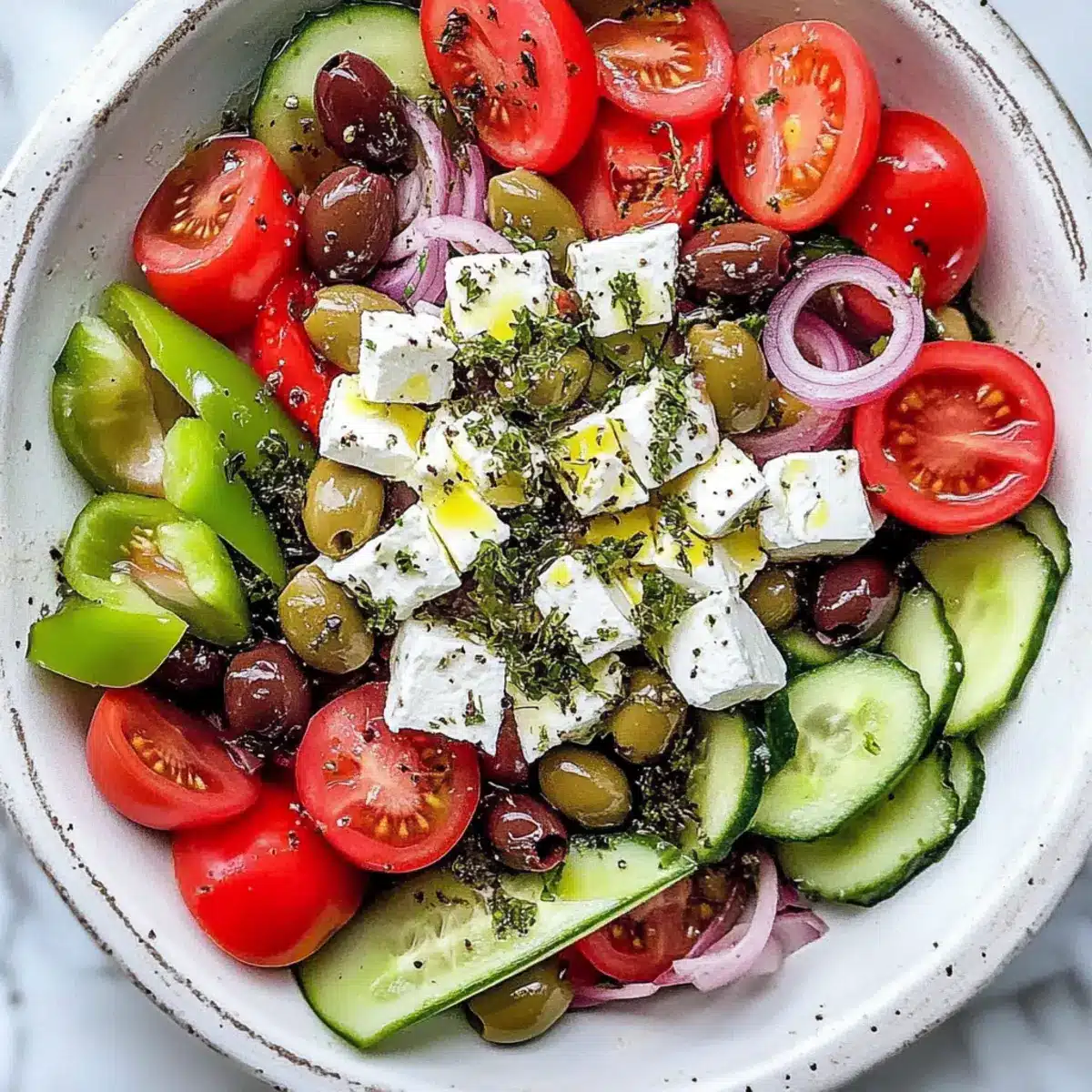
What to Serve with Authentic Greek Horiatiki Salad
This glorious salad pairs wonderfully with a variety of dishes that enhance its fresh flavors and textures, creating a memorable meal experience.
- Grilled Chicken Skewers: Juicy and slightly smoky, these skewers complement the salad’s bright, crisp ingredients perfectly.
- Lemon Herb Quinoa: A light and nutritious side that adds a nutty flavor and fluffy texture, enhancing your meal’s Mediterranean vibes.
- Pita Bread with Hummus: Soft and fluffy pita served with creamy hummus is a fantastic vehicle for all those vibrant salad bites.
- Spanakopita: Savory spinach and feta-filled pastries provide a delightful contrast to the fresh crunch of Horiatiki, making every bite a treat.
- Greek-Style Grilled Lamb: The rich, tender meat pairs wonderfully with the salad’s acidic tang, creating a harmonious balance of flavors.
- Tzatziki Sauce: This cool and creamy yogurt dip, with its cucumber notes, echoes the freshness of the salad, making every bite feel refreshing.
- Roasted Vegetables: Sweet and caramelized veggies add depth next to the bright salad, creating a wonderful textural contrast and hearty balance.
- Assorted Olives and Feta Platter: A selection of olives and creamy feta served alongside is a perfect way to bring the Mediterranean spirit to the table.
- Souvlaki: Skewered meat seasoned with herbs invites guests to indulge, and balances the light, refreshing salad beautifully.
- Sparkling Water with Lemon: A refreshing beverage choice that cleanses the palate and enhances the fresh, zesty flavors present in the salad.
Expert Tips for Traditional Greek Salad
- Fresh Ingredients Matter: Always opt for the freshest seasonal produce. Quality vegetables enhance the vibrant flavors of your Traditional Greek Salad.
- Balance Flavors: Taste as you go! Adjust the salt and pepper to ensure a perfect balance that highlights the freshness of the salad.
- Dress Just Before Serving: To maintain crispness, dress the salad just before serving rather than letting it sit. This preserves its delightful textures.
- Cut Evenly: Chop ingredients into similar sizes for a pleasing look and even flavor in every bite.
- Experiment with Ingredients: Don’t be afraid to swap ingredients! Use roasted red peppers instead of green bell peppers or add chickpeas for extra protein in your Traditional Greek Salad.
How to Store and Freeze Traditional Greek Salad
Fridge: Store leftovers in an airtight container in the fridge for up to 2 days. The salad may lose some of its crispness, but it will still be delightful.
Room Temperature: It’s best to serve Traditional Greek Salad fresh. If left out, it should be consumed within 2 hours to ensure food safety.
Freezer: Freezing is not recommended for this salad, as the texture of the fresh vegetables and feta can become mushy upon thawing.
Reheating: Since this salad is served cold, there’s no need for reheating—just enjoy it straight from the fridge!
Make Ahead Options
These delicious Traditional Greek Salad components are perfect for meal prep enthusiasts! You can chop the tomatoes, cucumbers, and bell peppers up to 24 hours in advance, ensuring they stay fresh and vibrant by refrigerating them in an airtight container. Additionally, you can thinly slice the red onion and olives beforehand—just store them separately to maintain their flavors. When ready to enjoy, simply combine all the prepped ingredients, season, and dress with the olive oil and vinegar mixture. Adding the feta and oregano just before serving keeps them fresh, ensuring your Greek salad is as delightful and colorful as if it were made fresh that day!
Traditional Greek Salad Variations
Feel free to explore the endless possibilities with your Traditional Greek Salad, adding your personal touch to this colorful dish.
-
Roasted Red Peppers: Replace green bell peppers with roasted red peppers for a sweet, smoky flavor enhancement; they add vibrant color too!
-
Vegan Alternative: Swap out feta cheese for a dairy-free alternative made from nuts for an equally creamy texture without the dairy.
-
Protein Boost: Stir in chickpeas or cooked quinoa for added protein; these ingredients will make this salad even heartier.
-
Herb Swaps: Try fresh herbs like basil or parsley in place of dried oregano for a fragrant twist that elevates the salad beautifully.
-
Citrus Zing: Squeeze in fresh lemon juice right before serving to brighten up the flavors; the added acidity is a refreshing change.
-
Extra Crunch: Toss in some toasted pine nuts or sunflower seeds for added crunch; they introduce a delightful nutty flavor that complements the salad.
-
Spicy Kick: For those who like some heat, sprinkle in crushed red pepper flakes or add sliced jalapeños to give the salad a spicy edge.
-
Mediterranean Twist: Incorporate artichoke hearts or sun-dried tomatoes for a rich, tangy flavor profile that takes your salad on a delicious adventure.
Remember, cooking is all about personalizing your dishes! As you play with these variations, you might also enjoy these other easy Mediterranean recipes that highlight fresh ingredients and vibrant flavors.
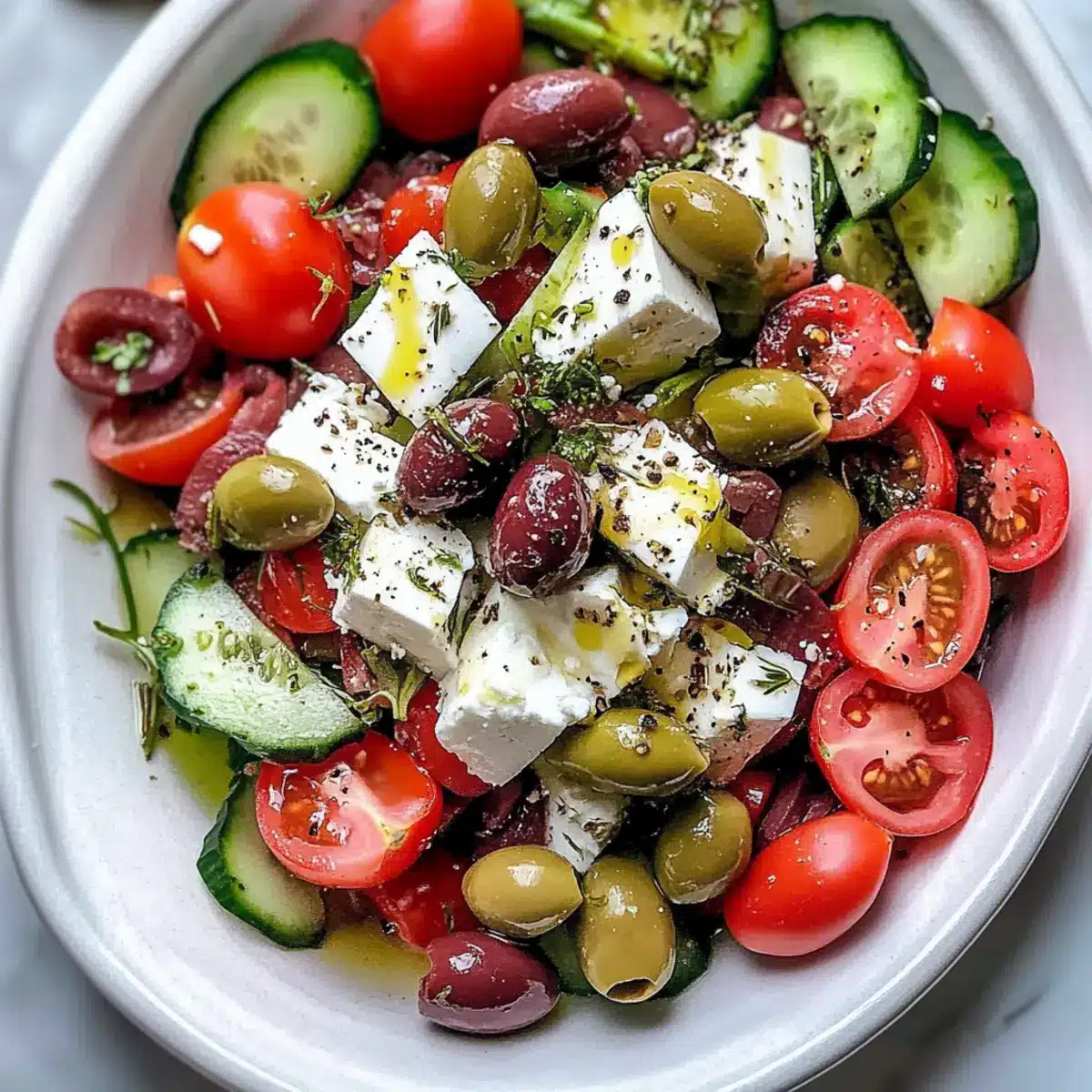
Traditional Greek Salad Recipe FAQs
What type of tomatoes should I use for my salad?
Absolutely! I recommend using Campari, cocktail, or cherry tomatoes for a perfect balance of sweetness and juiciness. Look for tomatoes that are deep red and firm to the touch; avoid those with dark spots or blemishes.
How should I store leftover Traditional Greek Salad?
You can store leftovers in an airtight container in the fridge for up to 2 days. While the flavors will still be delicious, the texture may lose some crispness. To maintain freshness, try to keep the dressing separate until you plan to enjoy it again.
Can I freeze Traditional Greek Salad?
Freezing is not recommended for this salad. The fresh vegetables, especially cucumbers and tomatoes, will turn mushy upon thawing, losing their delightful crunch and flavor. It’s best to enjoy it fresh!
What should I do if my salad lacks flavor?
If you find your Traditional Greek Salad a bit bland, it could be due to insufficient seasoning. Start by adjusting salt and pepper, adding more to taste. You could also squeeze fresh lemon juice over the top or drizzle more olive oil for enhanced flavor. Mix everything well after making adjustments to ensure all ingredients are well combined.
Is this salad safe for people with allergies?
Always check the ingredients first! Traditional Greek Salad is generally safe, but watch out for common allergens. Feta cheese is made from sheep’s milk, so be cautious if you’re lactose intolerant. For those with olive allergies, you can omit the olives altogether or replace them with a nutty flavor such as toasted sunflower seeds.
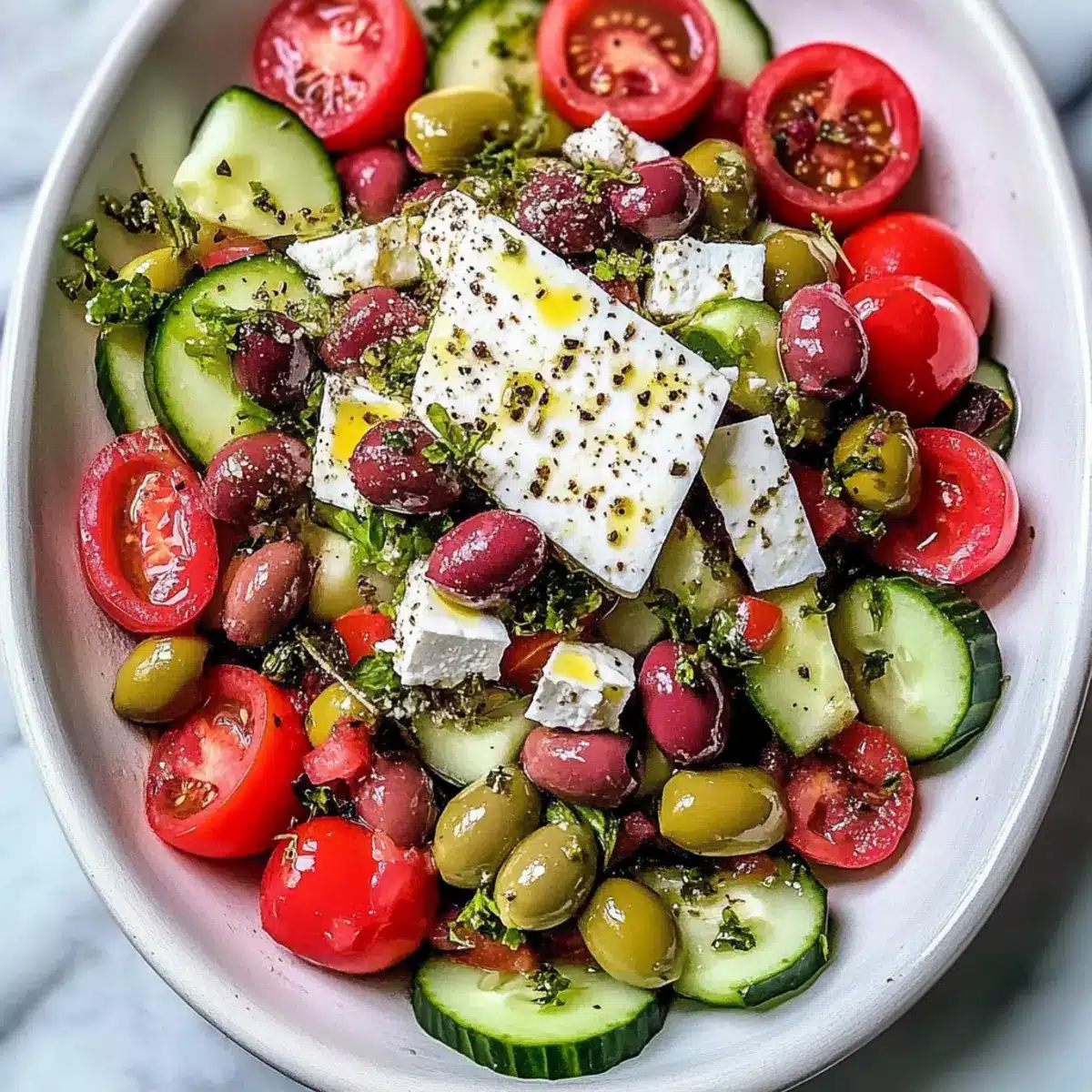
Delicious Traditional Greek Salad You’ll Love Making at Home
Ingredients
Equipment
Method
- Gather a large mixing bowl and wash your fresh ingredients. Chop approximately 2 cups of ripe tomatoes, one crisp cucumber, and one green bell pepper into bite-sized pieces. Thinly slice half a red onion, then add all the vegetables to the bowl. Gently toss them together until combined.
- Measure out about 1 cup of pitted Kalamata olives and introduce them to the vegetable mix in your bowl. Toss everything gently to distribute the olives evenly among the other ingredients.
- Sprinkle your salad with kosher salt and freshly ground black pepper to taste. Toss the salad lightly to incorporate the seasonings.
- In a small bowl, whisk together 3 tablespoons of extra-virgin olive oil and 2 tablespoons of red wine vinegar. Drizzle this dressing over the salad while gently mixing everything.
- Cut 4 ounces of Greek sheep's milk feta cheese into slabs and arrange them on top of the salad. Sprinkle a teaspoon of dried oregano over the feta.
- Consider an extra drizzle of olive oil just before serving, and serve the salad in a beautiful bowl or on a platter.
Leave a Reply