
The aroma of slow-cooked Beef Carbonnade wafting from the kitchen is pure magic, a gentle reminder that comfort food can bring people together. Often celebrated in Belgian cuisine, this hearty beef stew features tender short ribs simmered in rich beer, mustard, and aromatic vegetables, elevating any family gathering or cozy weeknight dinner. What I adore most about this recipe is its adaptability—it can easily be made in the oven or transformed into a slow cooker masterpiece. Plus, with flexible options for substituting beer with red wine or beef stock, this dish can fit various dietary preferences. Whether paired with creamy mashed potatoes or some crusty bread, this Beef Carbonnade will quickly become a favorite at your table. Ready for a taste adventure that warms both the heart and the soul? Let’s dive in!
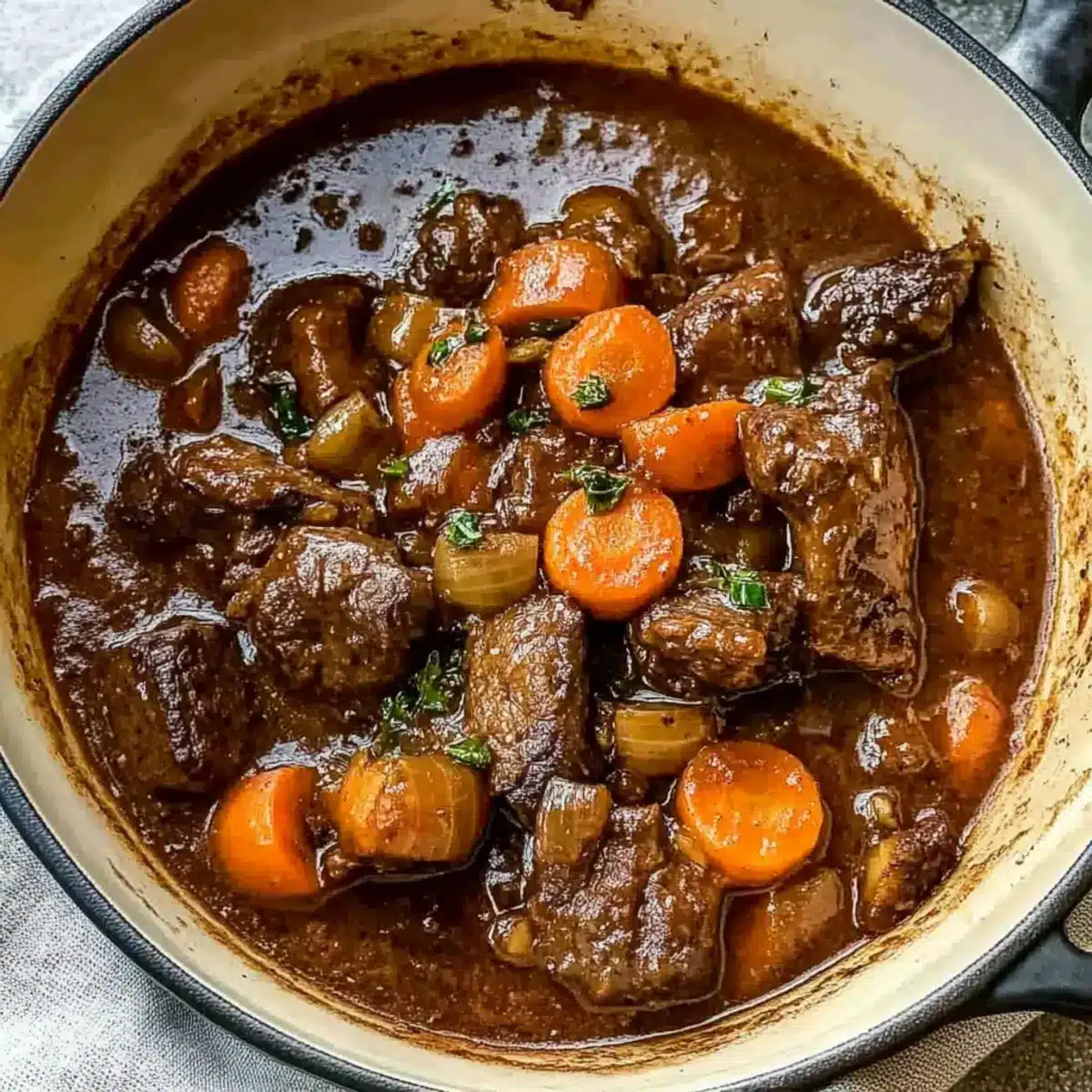
Why is Beef Carbonnade a must-try?
Rich Flavors: The slow-cooked beef melds beautifully with mustard, beer, and fresh herbs, providing a depth of taste that will have everyone at the table coming back for seconds.
Comforting Texture: Expect tender beef that practically melts in your mouth, enveloped in a luscious sauce that clings to each bite.
Versatile Cooking Methods: You can easily adapt this recipe to your preferences, whether you choose the traditional oven method or a convenient slow cooker setup.
Flexible Ingredients: With substitutions like red wine or beef stock, you can accommodate different tastes and dietary needs. Check out my Spicy Ground Beef for another delightful beef dish!
Perfect for Gatherings: This dish creates a warm, inviting atmosphere, making it ideal for family dinners or gatherings with friends. Serve it with creamy mashed potatoes or crusty bread for a complete meal that feels just right after a long day.
Beef Carbonnade Ingredients
For the Beef Stew
• Beef Short Ribs – a flavorful base for this hearty stew; choose trimmed, bone-in ribs for the best texture.
• Olive Oil – perfect for browning the meat and enhancing flavors; vegetable oil can be used if needed.
• Plain/All-Purpose Flour – dust the ribs to promote even browning; no substitutions are suggested.
• Carrot – adds natural sweetness and a pop of color; diced root vegetables work too if you want variety.
• Brown Onions – the foundational flavor; yellow onions can substitute if brown ones aren’t available.
• Button Mushrooms – they add richness and umami; keep them whole or slice for extra texture.
• Speck – contributes a delicious smoky note; bacon makes a suitable replacement if speck isn’t on hand.
• Tomato Paste – enriches the stew with complexity and color; this ingredient is indispensable.
• Garlic – a must for aromatic depth; opt for fresh garlic for optimal flavor.
• Wholegrain Mustard – adds a tangy punch; Dijon mustard can also stand in well.
• Fresh Thyme & Rosemary – they bring in herbal notes; if using dried herbs, remember to reduce the amount.
• Beer – the star liquid adds depth; substitute with red wine mixed with beef stock for variety too.
• Beef Stock – enhances richness; low-sodium versions are available for a lighter option.
• Salt & Pepper – essential seasonings; adjust to your taste preference.
Enjoy this Beef Carbonnade dish and its warm embrace that invites you to gather around the table!
Step‑by‑Step Instructions for Beef Carbonnade
Step 1: Preheat the Oven
Begin by preheating your oven to 160°C (320°F). This step is crucial for creating a warm environment that allows the flavors in the Beef Carbonnade to meld beautifully. While the oven heats, prepare your ingredients so everything is in place when you start cooking.
Step 2: Prepare the Ribs
Cut your beef short ribs into individual pieces and pat them dry with a paper towel. Dust each piece with plain flour, ensuring an even coating that promotes a nice, brown crust during cooking. This flour will help create the rich sauce that clings to the tender beef later.
Step 3: Brown the Ribs
In a large flameproof casserole pot, heat a drizzle of olive oil over medium-high heat. Once the oil shimmers, add the floured beef ribs in batches, browning them for about 3–4 minutes on each side until they’re a deep golden brown. Set the browned ribs aside on a plate while you prepare the vegetables.
Step 4: Sauté the Vegetables
In the same pot, add more olive oil if necessary, then toss in the diced carrot, sliced brown onions, button mushrooms, and speck. Sauté for about 5–7 minutes, stirring occasionally until the vegetables have softened and the onions become translucent, absorbing all those delicious beefy flavors left in the pot.
Step 5: Build Flavor with Garlic and Tomato Paste
Stir in the tomato paste and crushed garlic, cooking for an additional 30 seconds. This quick sauté releases the aromatic compounds in the garlic and allows the tomato paste to caramelize slightly, deepening the flavor base for your Beef Carbonnade.
Step 6: Add the Beer
Pour in your chosen beer, making sure to scrape up any brown bits from the bottom of the pot as it simmers. Bring the mixture to a gentle simmer, allowing the beer to bubble for about 2–3 minutes, which will help release its flavors and create a rich broth for the stew.
Step 7: Season and Add Herbs
Next, mix in the wholegrain mustard, fresh thyme, and rosemary. This is where the signature taste of Beef Carbonnade truly comes alive. Stir well, allowing the herbs to mingle with the liquid for about a minute while you continue to scrape the pot’s base for maximum flavor.
Step 8: Combine with Beef Stock and Ribs
Return the browned beef ribs to the pot along with the beef stock. The liquid should cover the ingredients about halfway. If you don’t have enough, feel free to add a bit more stock or water. This step ensures the beef will braise properly, contributing to the final dish’s melt-in-your-mouth texture.
Step 9: Bake to Perfection
Cover the pot with a lid and place it in the preheated oven. Bake for about 2 hours, or until the beef is fork-tender. Check occasionally to ensure there’s enough liquid; the result should be a hearty stew with thick, rich sauce clinging to each piece of beef, evoking the essence of traditional Beef Carbonnade.
Step 10: Final Seasoning
Once the cooking time is up, carefully remove the pot from the oven and taste the sauce for seasoning. Adjust with salt and pepper as needed, ensuring the flavors are balanced before serving. This final touch elevates your Beef Carbonnade, making it a comforting dish that sings with flavor.
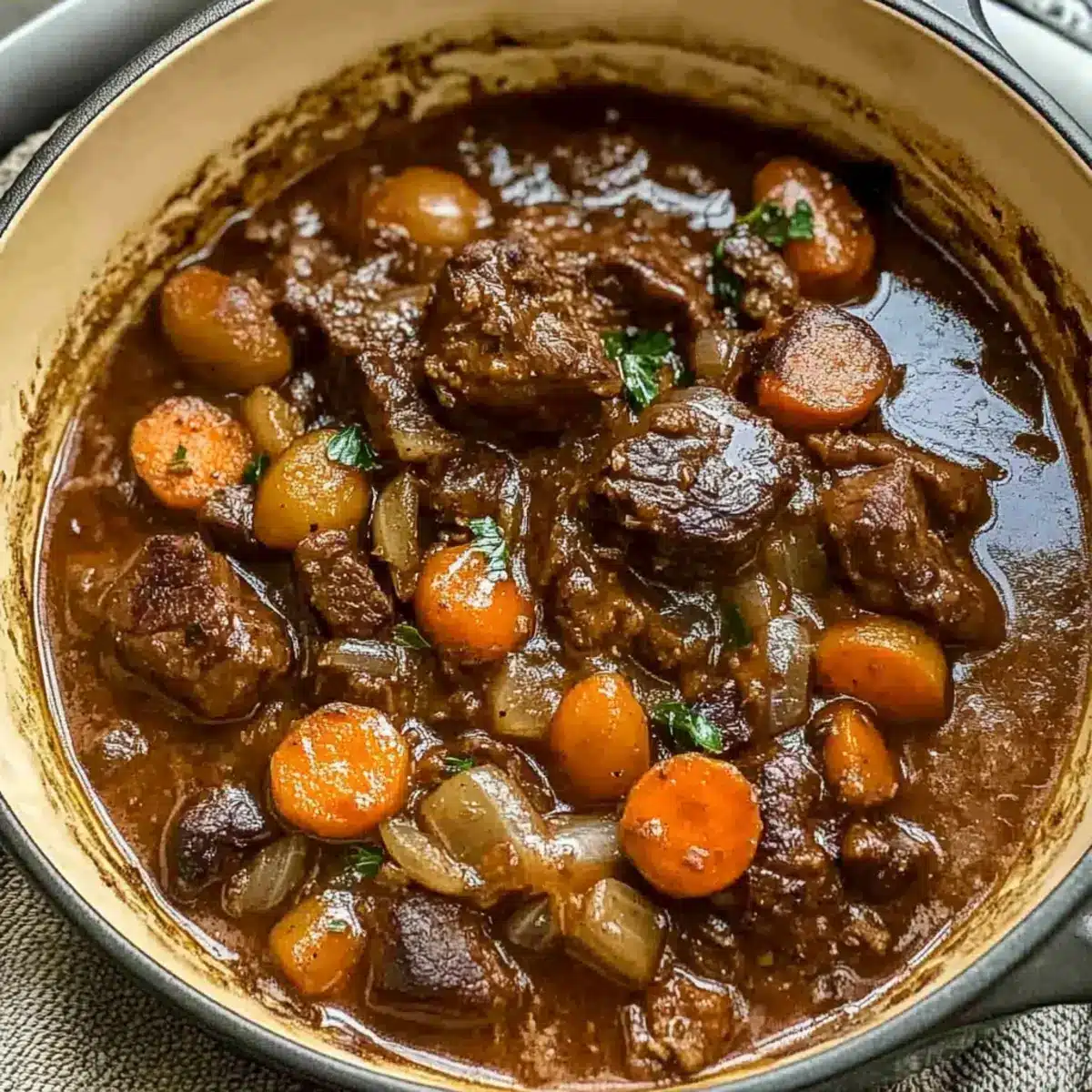
Beef Carbonnade: Variations & Substitutions
Feel free to personalize your Beef Carbonnade experience with these creative swaps and twists that will enhance its goodness!
- Wine Swap: Replace beer with a rich, full-bodied red wine. This adds a new layer of flavor that pairs beautifully with the beef.
- Stock It Up: For a non-alcoholic option, use beef stock exclusively. This swap not only keeps the richness but makes it friendly for all diets.
- Veggie Boost: Add diced potatoes or parsnips for extra heartiness. This not only enhances texture but also creates a more filling meal.
- Spice It Up: Incorporate a bay leaf or a dash of cayenne pepper for a slightly spiced twist. Just a hint can warm up the dish in a lovely way.
- Herb Variations: Experiment with different herbs like sage or parsley to switch up the flavor profile. Each herb brings its unique touch that can redefine the dish.
- Texture Twists: Try adding pearl barley or lentils for added texture and a nutritional boost. They’ll absorb the delicious juices while cooking.
- Smoky Flavor: If you can’t find speck, use smoked bacon or pancetta for that lovely smoky note, enhancing the overall savories of the stew.
- Creamy Element: Stir in a splash of heavy cream just before serving for a luscious finish, reminiscent of some creamy beef dishes like Creamy Beef and Shells.
These variations will elevate your Beef Carbonnade, adding both depth and personality to this beloved dish! Enjoy the process of creating something uniquely yours while savoring this hearty meal.
Expert Tips for Beef Carbonnade
-
Brown the Ribs Well: Properly browning the beef ribs before braising enhances flavor and creates a richer sauce. Don’t rush this essential step.
-
Adjusting Cooking Time: If your beef isn’t tender after 2 hours, don’t hesitate to extend the cooking time by 30 minutes. Patience here yields delicious results.
-
Thickening the Sauce: For a thicker sauce, remove the ribs towards the end and simmer the sauce on medium heat until it reduces to your desired consistency.
-
Slow Cooker Adaptation: You can adapt this beef carbonnade recipe for a slow cooker! After step 9, set your slow cooker on low for 6-8 hours for a flavorful, low-maintenance version.
-
Flavor Variations: Don’t hesitate to swap ingredients based on your pantry. Red wine or beef stock work wonderfully in place of beer, catering to your taste preferences.
Storage Tips for Beef Carbonnade
Fridge: Store leftovers in an airtight container for up to 3 days. Let it cool completely before sealing to prevent condensation.
Freezer: Beef Carbonnade can be frozen for up to 3 months. Portion it into freezer-safe containers, ensuring it’s tightly sealed to avoid freezer burn.
Reheating: When ready to enjoy again, gently reheat on the stove or in the microwave, adding a splash of beef stock or water to maintain moisture. For best results, reheat slowly over low heat.
Thawing: Always thaw in the fridge overnight for safety. Once thawed, reheat thoroughly before serving to savor the flavors of this delicious Beef Carbonnade.
Make Ahead Options
Beef Carbonnade is an excellent choice for meal prep, saving you valuable time during your busy week! You can prepare the beef mixture and sauté the vegetables up to 24 hours in advance. Simply refrigerate the browned ribs and sautéed veggies in an airtight container to preserve their flavors. When you’re ready to cook, just combine the components with the remaining ingredients and follow the final baking steps. The longer flavors meld together, the richer your Beef Carbonnade will be, making it just as delicious when prepared ahead of time. For even more convenience, this dish can be refrigerated for up to 3 days once cooked, ensuring you have a hearty meal waiting for you!
What to Serve with Slow Cooked Beef Carbonnade?
When you’ve simmered up this delightful Beef Carbonnade, the next step is to create a complete and comforting meal that will leave everyone satisfied.
-
Creamy Mashed Potatoes: These luscious potatoes soak up the rich sauce, adding a silky texture that perfectly complements the hearty beef.
-
Crispy Roast Potatoes: Their crunchy outside and fluffy inside provide a delightful contrast to the tender meat, making every bite a texture adventure.
-
Garlic Butter Green Beans: Fresh green beans sautéed in garlic butter add a burst of color and brightness, cutting through the richness of the stew.
-
Fresh Salad with Vinaigrette: A light salad with a tangy vinaigrette offers a refreshing balance to the robust flavors of the Beef Carbonnade, cleansing the palate beautifully.
-
Crusty Bread: A warm, crusty loaf is perfect for mopping up that delicious sauce, bringing a delightful rustic element to your meal.
-
Belgian Beer: Pairing this dish with a Belgian ale echoes the dish’s roots while enhancing the flavorful notes of your stew, elevating the overall dining experience.
Creating these pairings makes your table feel complete and inviting, welcoming everyone to gather around and enjoy the warmth and flavor of a home-cooked meal.
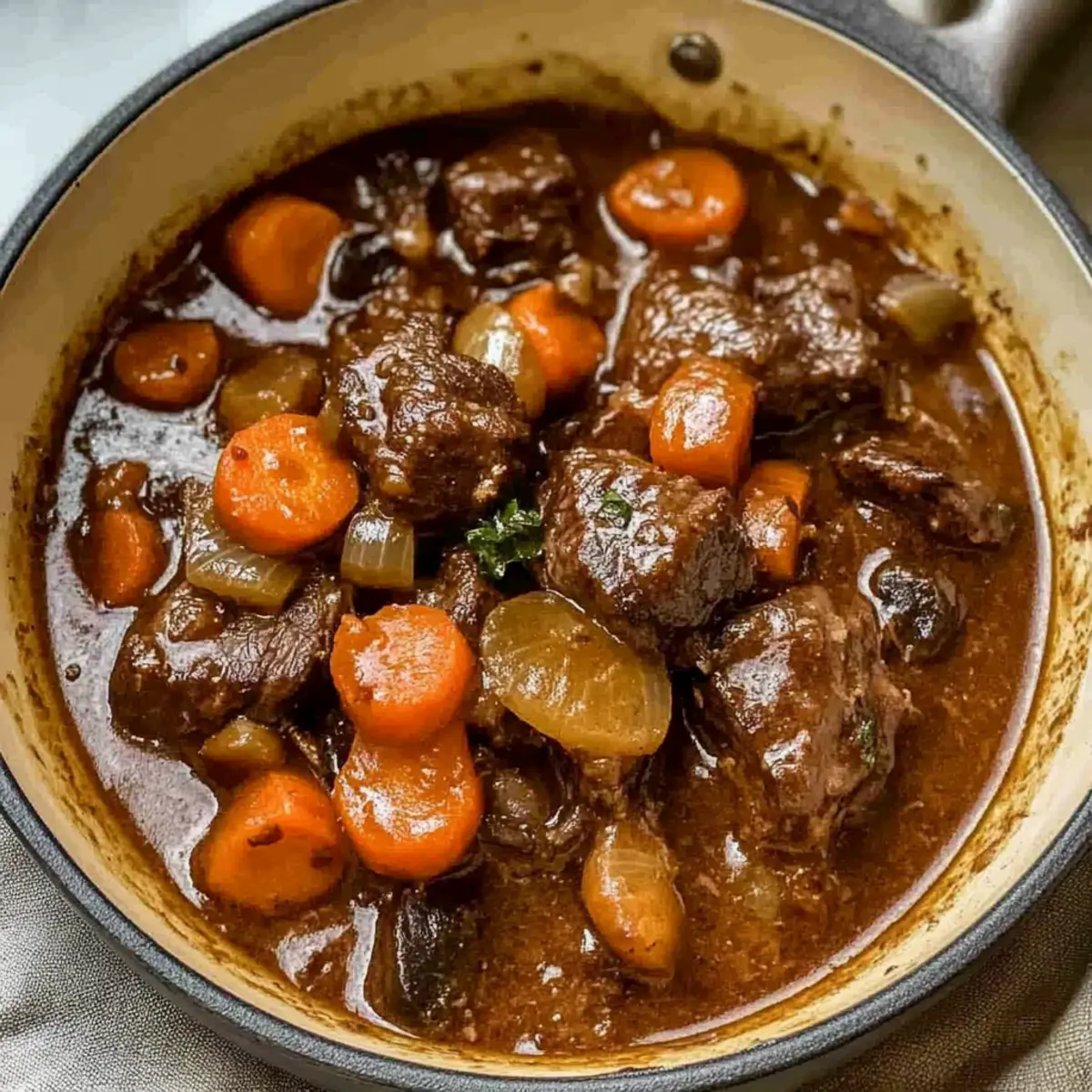
Beef Carbonnade Recipe FAQs
What type of beef should I use for Beef Carbonnade?
Absolutely, using beef short ribs is key for this dish as they offer the deep flavor and tenderness that can melt in your mouth after slow cooking. Look for trimmed, bone-in ribs, as they provide excellent texture and richness to the stew.
How should I store leftover Beef Carbonnade?
The best way to store your Beef Carbonnade is in an airtight container in the fridge, where it will keep well for up to 3 days. Make sure to let it cool completely before sealing to reduce condensation and preserve the dish’s flavor.
Can I freeze Beef Carbonnade?
Yes! You can freeze Beef Carbonnade for up to 3 months. To do this, portion it out into freezer-safe containers, ensuring they are tightly sealed to prevent freezer burn. When you’re ready to enjoy it again, thaw it overnight in the fridge and gently reheat on the stove or in the microwave, adding a splash of beef stock if needed to maintain moisture.
What if my beef isn’t tender after cooking?
If your beef isn’t fork-tender after the recommended cooking time of 2 hours, don’t fret! Simply extend the cooking time by 30 minutes or more, checking periodically. Remember, cooking beef slowly is essential to break down the connective tissues, leading to that melt-in-your-mouth texture.
Can I make this recipe gluten-free?
Certainly! To adapt this Beef Carbonnade for a gluten-free diet, you can substitute the all-purpose flour with a gluten-free alternative like cornstarch or a gluten-free flour blend for browning the beef. Additionally, ensure that the beer or beef stock you choose is gluten-free as well.
Is there an alternative to beer in this recipe?
Very much so! If you prefer not to use beer, you can substitute it with a good-quality red wine mixed with beef stock. This combination maintains the richness and depth of flavor that defines Beef Carbonnade, allowing you to tailor it to your preferences.
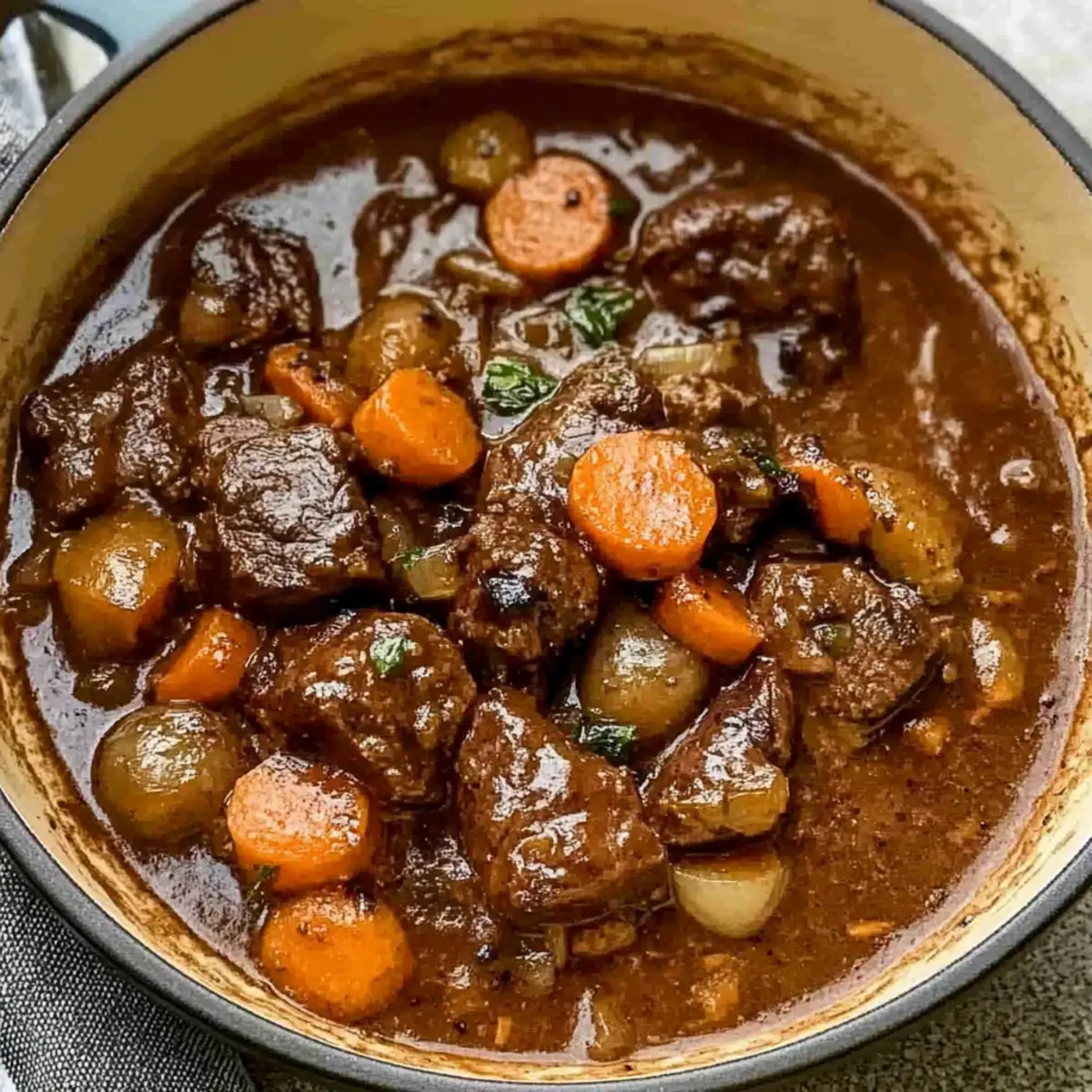
Savory Beef Carbonnade: The Ultimate Comfort Food Experience
Ingredients
Equipment
Method
- Preheat the oven to 160°C (320°F). Prepare ingredients.
- Cut beef short ribs into individual pieces and pat dry. Dust with flour.
- In a large pot, heat olive oil over medium-high heat. Brown ribs on each side for about 3-4 minutes.
- Add carrot, onions, mushrooms, and speck to the same pot. Sauté for 5-7 minutes.
- Stir in tomato paste and garlic, cooking for an additional 30 seconds.
- Pour in beer, scraping the pot to release browned bits, and simmer for 2-3 minutes.
- Mix in mustard, thyme, and rosemary. Stir well.
- Return browned ribs to pot with beef stock, covering ingredients halfway.
- Cover and bake in preheated oven for about 2 hours until beef is fork-tender.
- Taste and adjust seasoning with salt and pepper before serving.
Leave a Reply